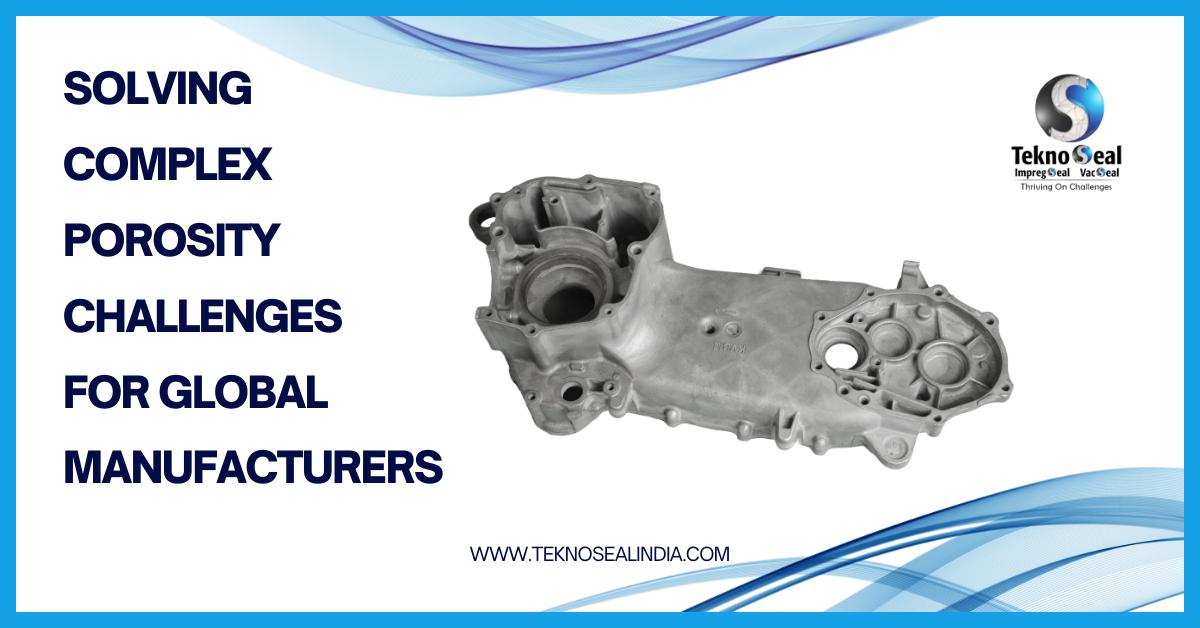
Porosity is an unavoidable reality in metal casting and precision machining. Yet while every foundry and machine shop encounters porosity, not all porosity behaves the same way — and not all of it can be solved using the same method. Understanding the difference between micro-porosity, macro-porosity, shrinkage cavities, and structural defects is critical to selecting the right corrective or preventive solution. More importantly, it prevents unnecessary scrap, wasted machining effort, and avoidable production losses.
In modern automotive, EV, hydraulics, and aerospace manufacturing, even a microscopic leak path can cause complete component rejection. Engineers today must not only detect porosity — they must also correctly diagnose whether it is sealable, repairable, or irrecoverable.
Micro vs. Macro Porosity: Why Size and Connectivity Matter
Porosity varies in both size and connectivity. Macro-porosity refers to large, visible cavities or blowholes that can often be seen on the surface of a casting. These defects are typically caused by improper gating, riser design, or severe gas entrapment. Macro defects are structural in nature and usually require welding, re-machining, or scrapping.
Micro-porosity, on the other hand, consists of microscopic interconnected void networks formed during metal solidification. These pores are often between 10 and 300 microns in diameter and are completely invisible to the naked eye. Despite their size, these micro-channels can form continuous leak paths that allow oil, fuel, coolant, compressed air, refrigerants, or gases to pass through the component wall — especially under pressure and thermal cycling.
It is precisely this micro interconnected porosity that vacuum impregnation is designed to eliminate.
What Vacuum Impregnation Can Seal
Vacuum impregnation works by sealing internal, interconnected porosity networks. During the process, a deep vacuum removes trapped air and moisture from within the pore structure. A low-viscosity methacrylate sealant is then introduced and forced deep into these pores under pressure. Heat curing polymerizes the sealant, permanently sealing the leak paths without affecting the component’s dimensions, strength, or surface finish.
Industry benchmarks indicate that interconnected porosity up to approximately 300 microns can be effectively sealed, depending on casting density, wall thickness, geometry, and material type.
Vacuum impregnation works best for:
- Gas entrapment porosity formed during casting
- Thin-wall aluminium and magnesium castings
- Capillary leak paths in pressure-bearing components
- Leak failures detected after machining and assembly
- Porosity that is continuous through the component wall
These conditions are commonly found in EV motor housings, battery cooling plates, transmission valve bodies, compressor housings, hydraulic manifolds, and engine blocks.
What Impregnation Cannot Solve
It is equally important to understand what impregnation is not designed to fix. Vacuum impregnation cannot repair structural defects or gross casting failures. The process is a sealing solution — not a metallurgical repair method.
Impregnation is not effective for:
- Cracks, fractures, and fatigue failures
- Large surface blowholes typically greater than 0.5 mm
- Severe shrinkage cavities caused by poor riser design
- Porosity heavily contaminated by oils or debris that cannot be cleaned
- Metallurgical discontinuities that compromise structural integrity
Attempting to impregnate such defects can lead to inconsistent results and should be avoided.
Real Industry Example
A premium manufacturing company was experiencing persistent leak failures in thin-wall aluminium motor housings. Pressure testing revealed failures between 90 and 120 bar, yet visual inspection showed no visible defects. Multiple conventional repair attempts failed because the leak paths were internal and microscopic.
After introducing vacuum impregnation, the manufacturer achieved 100% leak-free performance. More than ₹2.2 crore worth of fully machined components were recovered instead of being scrapped. This not only prevented major production loss but also stabilized OEM supply commitments and reduced warranty risk.
Why Early Diagnosis Is Critical
One of the biggest cost escalators in foundries is rejecting components after machining. By the time a part reaches pressure testing, significant value has already been added through machining, inspection, and handling.
Accurate porosity diagnosis early in the process allows manufacturers to make informed decisions:
| Condition | Recommended Action |
| Micro interconnected porosity | Vacuum impregnation |
| Large surface cavities | Welding or rework |
| Deep cracks | Scrap or metallurgical repair |
| Inconsistent leak values | Process audit and validation |
By applying impregnation proactively, manufacturers prevent expensive post-machining rejections, improve yield, and maintain stable delivery commitments.
The Strategic Advantage
Vacuum impregnation is not a repair shortcut. It is a precision engineering process that transforms porous castings into pressure-tight, high-reliability components — provided the porosity falls within sealable limits.
Knowing what size of porosity can be sealed allows manufacturers to make smarter production decisions, protect margins, and maintain long-term OEM confidence.